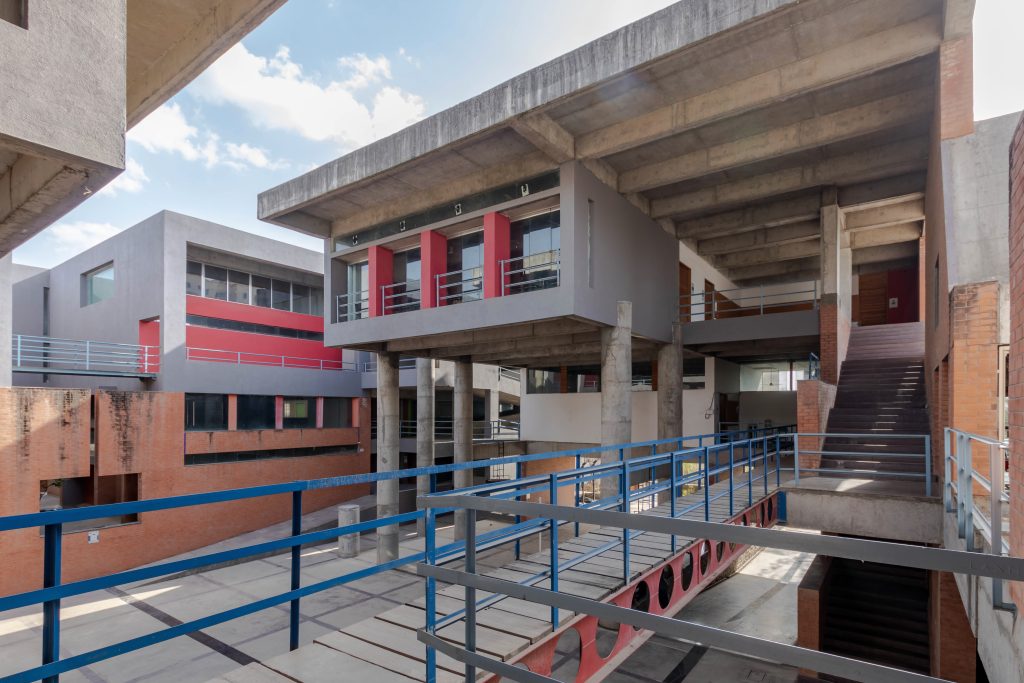


Postgraduate
Master of Architecture in (Design & Project Management)
Course Duration : 2 years (Full Time)
Affiliated to Savitribai Phule Pune University | Approved by the Council of Architecture, New Delhi
In a world rapidly building and rebuilding, architects today are called to lead, not just design. The Master of Architecture program at SMEF’s Brick School of Architecture prepares you to shape the built and unbuilt environment with purpose, precision, and leadership.
The Master of Architecture (M.Arch) in Design & Project Management at SMEF’s Brick School of Architecture has been offered since the Academic Year 2022–23.
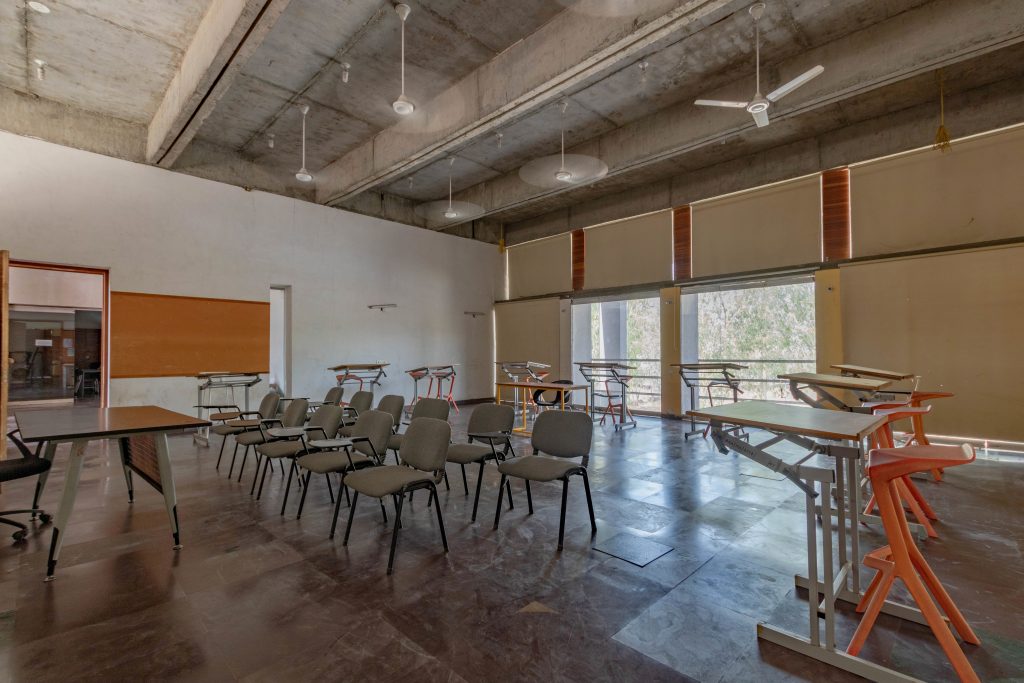
Apititude Test
The candidate must have obtained a non-zero score in the Post-Graduate Entrance Test in Architecture (PGETA) conducted by the Council of Architecture (COA).
Details of fees for First Year M.Arch of AY 2025-26. |
Amount in Indian Rupees |
|---|---|
Tuition & Development Fees |
Rs 1,45,000/- |
Caution money deposit |
Rs 6,000/- |
University Fees |
Rs 800/- |
Total |
Rs 1,51,800/- |
Fees Proposal submitted to Fees Regulating Authority for A.Y. 2026-27
Click here to check approved fees by the Fees Regulating Authority for the academic year 2025-26 is 1,15,000/
Student Council Fund Rs. 4000/- to be paid separately*
Lifetime membership of the BRICK Alumni Fund Rs. 3000/- to be paid separately.

Addmission to the M.Arch(Design and Project Management is through Government of Maharashtra Centralize Admission Process(CAP)
Candidates must apply online at https://cetcell.mahacet.org/ as per the schedule. The admission process includes the following steps:
- Online Registration – Candidates must register online and upload all required documents on the admission portal.
- Document Verification – Verification and confirmation of the application form must be completed at the selected Facilitation Centre (FC) in online/offline mode.
- Option Form Submission – Candidates must fill and confirm the Option Form for CAP Rounds I, II, and III through their login on the website.
- Seat Allotment – If a seat is allotted, the candidate must select the Freeze or Not Freeze option.
- Reporting to the Institute – Candidates must report to the allotted institute for admission confirmation by submitting the required documents and paying the prescribed fees within the given timeline.
Documents required for securing admission:
- CET- Receipt cum Acknowledgement Letter, Seat Allotment letter & Seat Acceptance Letter
- Valid PGETA Scorecard
- B.Arch Final Year mark sheet and Degree Certificate
- 12th standard mark sheet
- 10th standard mark sheet
- Domicile Certificate/Birth Certificate
- B.Arch Transfer/Leaving Certificate
- Migration Certificate (if Applicable)
- EWS Certificate, Caste Certificate, Caste Validity Certificate and Non-Creamy Layer certificate (if applicable)
MS in Sustainable
Design
Course Duration : 2 years (Full Time)
The Satish Misal Education Foundation’s Brick Group of Institutes, Pune, in collaboration with Thomas Jefferson University’s award-winning MS in Sustainable Design program, offers a unique international pathway designed for the next generation of architects and design leaders.
This program allows students to begin their graduate studies in India through a hybrid/online model and transition seamlessly to on-campus learning in the United States in Year 2, earning a globally recognized MS in Sustainable Design degree from Jefferson.
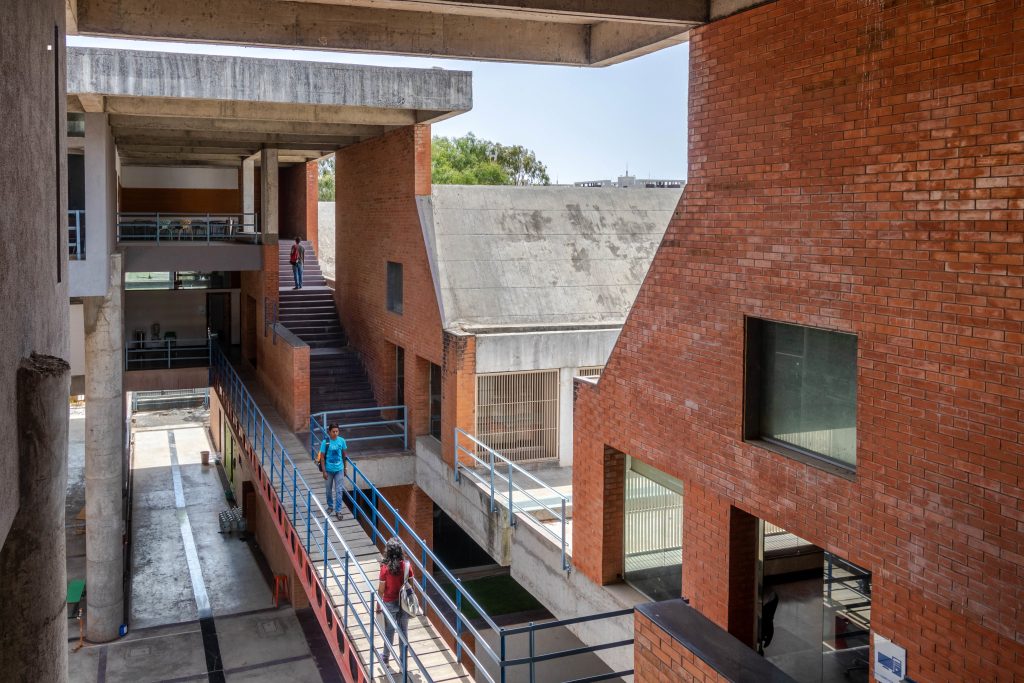
Candidate should have passed Bachelor Degree in Architecture from All India Council for Technical Education or Council of Architecture or Central or State Government approved institutions or equivalent, with at least 50 % marks
Apititude Test
Candidate should have obtained non zero score in MAH-M.ARCH-CET (details are available on https://cetcell.mahacet.org/)
For detailed fee structure, please visit: https://www.jefferson.edu/academics/colleges-schools-institutes/architecture-and-the-built-environment/programs/sustainable-design-ms/brick-partnership.html
Admission Procedure:
The candidates should apply online on https://cetcell.mahacet.org/ as per the Schedule as follows:
- Online registration of application and uploading of required documents by the Candidate for admission on website
- Documents verification and confirmation of Application Form for Admission by selecting Facilitation center
- Online Submission & Confirmation of Option Form for CAP Round I, II, III through candidates Login by himself/herself through the website.
- If seat is allotted Select Freeze/Not freeze Option.
- Reporting to the Allotted Institute and Confirmation of Admission by submitting required documents and payment of fee.
Study Architecture in India
Studying architecture in India offers a rigorous, professionally accredited education within one of the world’s most dynamic and rapidly evolving built environments. Architectural programmes in India are governed by the University Grants Commission (UGC) and the Council of Architecture (COA), ensuring adherence to nationally prescribed academic standards, professional competencies, and ethical practice requirements. This regulatory framework provides students with a structured, quality-assured education that is widely recognised across India and aligned with international benchmarks in architectural education.
Architecture education in India follows a studio-centric, outcome-based curriculum in accordance with the COA’s Minimum Standards of Architectural Education. The curriculum integrates design, technology, humanities, and professional practice, enabling students to develop strong competencies in architectural design, building construction, structural systems, environmental design, building services, and urban studies. Learning is supported through design studios, theory courses, site visits, workshops, and mandatory professional training, fostering critical thinking, contextual sensitivity, sustainability awareness, and climate-responsive design – skills essential to contemporary architectural practice.
Indian architecture programmes are also aligned with international learning outcomes and accreditation frameworks, supporting global academic and professional mobility. Graduates from COA-recognised institutions are eligible for professional registration in India and are well positioned to pursue higher studies, professional licensure pathways, or employment opportunities abroad, subject to country-specific requirements. Exposure to digital design tools, Building Information Modelling (BIM), and emerging construction technologies further ensures that graduates remain competitive in a rapidly evolving global profession.
Studying architecture in India allows students to engage meaningfully with real-world challenges such as affordability, inclusivity, heritage conservation, urbanisation, and environmental performance within a rich and diverse socio-cultural context. Supported by experienced faculty, research-oriented teaching, and an internationally benchmarked curriculum, students are prepared to contribute responsibly and innovatively to sustainable built environments at both national and global scales.
Affordable access to quality education, combined with strong professional accreditation and contextual learning, makes India a compelling destination for future-ready architectural education.